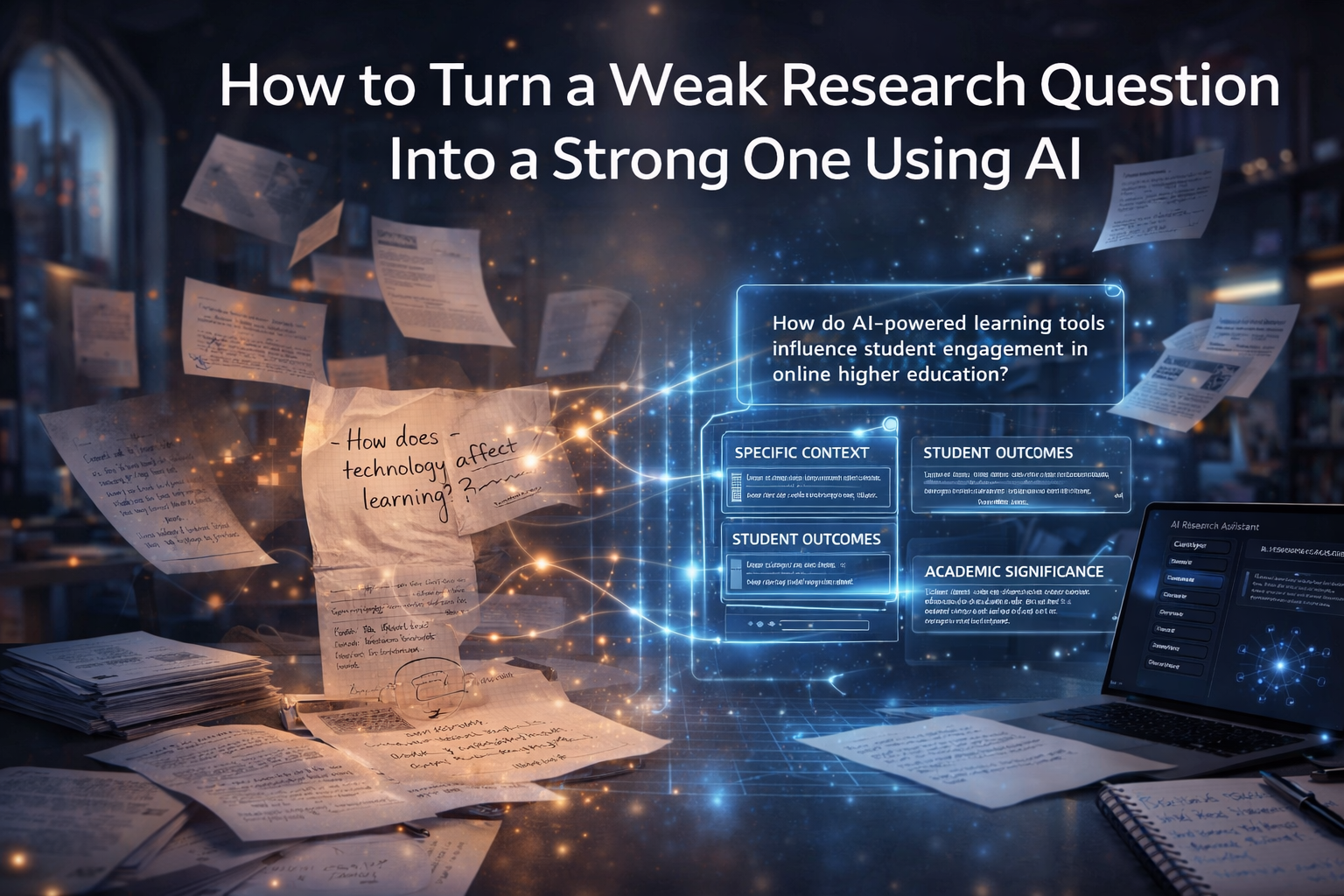
A strong research paper starts with a strong research question. However, many students and researchers struggle at this early stage. A weak research question often leads to unclear objectives, unfocused methodology, and weaker conclusions.
Even well-written papers can face difficulties during peer review if the research question lacks clarity or academic significance. Reviewers often identify weak research questions as a major limitation because they shape the entire study.
This article explains how to identify weak research questions, why they matter in academic research, and how AI tools can help refine and strengthen them.
Why Research Questions Matter More Than You Think
The research question is the foundation of your entire study. It determines:
- Research objectives
- Methodology selection
- Data collection approach
- Analysis structure
- Final conclusions
A weak research question creates problems across all these areas.
For example, an unclear research question may lead to:
- Broad or unfocused literature review
- Misaligned methodology
- Weak discussion section
- Limited research contribution
Because of this, reviewers often evaluate research questions early when assessing paper quality.
Common Signs of a Weak Research Question
Weak research questions usually share certain characteristics. Identifying these early can significantly improve research quality.
1. Research Question Is Too Broad
One of the most common mistakes is writing overly broad research questions.
Weak example:
“How does AI impact education?”
This question is too broad and difficult to answer effectively.
Stronger version:
“How do AI writing assistants affect undergraduate students’ academic writing performance in higher education?”
Why this matters:
Specific research questions lead to clearer methodology and stronger results.
2. Research Question Is Too Narrow
While broad questions create confusion, overly narrow questions limit contribution.
Weak example:
“How does one AI tool affect one class of students in one university?”
This may limit the relevance and impact of research.
Better approach:
Balance specificity with academic relevance.
3. Research Question Lacks Academic Significance
Some research questions may be clear but not meaningful academically.
Weak example:
“Do students like AI tools?”
This question lacks depth and academic contribution.
Stronger version:
“What factors influence student adoption of AI tools in academic writing?”
This version explores meaningful insights.
How Weak Research Questions Affect Research Papers
Weak research questions impact multiple sections:
Literature Review Becomes Unfocused
Without a clear research question, literature reviews often become descriptive instead of analytical.
Methodology Becomes Unclear
Researchers may struggle to justify research design choices.
Findings Become Less Meaningful
If the research question is weak, conclusions may lack significance.
How AI Can Help Improve Research Questions
AI tools can support researchers in refining research questions by:
- Suggesting clearer wording
- Identifying research gaps
- Improving specificity
- Aligning with literature
AI assistance is especially useful when researchers are:
- Starting new projects
- Changing research direction
- Writing thesis proposals
Using AI to Refine Research Questions
Researchers can follow this workflow:
Step 1
Write an initial research question
Step 2
Use AI to analyze clarity and scope
Step 3
Refine wording and focus
Step 4
Check academic relevance
Step 5
Align with research objectives
This structured approach helps improve research quality.
Examples of Weak vs Strong Research Questions
Weak:
“How does technology affect learning?”
Strong:
“How do AI-powered learning tools influence student engagement in online higher education?”
Weak:
“Do researchers use AI tools?”
Strong:
“What factors influence researcher adoption of AI-assisted academic writing tools?”
These examples demonstrate how clarity improves research questions.
Common Mistakes When Using AI for Research Questions
Researchers should avoid:
Overcomplicating Questions
AI suggestions may sometimes create overly complex questions.
Changing Research Direction Too Often
Refining is helpful, but frequent changes can delay research progress.
Ignoring Academic Context
Research questions must align with discipline-specific expectations.
When to Refine Research Questions Most Carefully
Refining research questions is especially important during:
- Proposal writing
- Thesis planning
- Literature review stage
- Journal submission preparation
Early refinement saves time later.
Final Thoughts
Strong research questions lead to clearer research, stronger arguments, and more meaningful contributions. Weak questions, on the other hand, create challenges throughout the research process.
AI tools can help refine research questions by improving clarity, scope, and academic relevance. However, researchers should combine AI suggestions with their own academic judgment.
Platforms like ResearchPal can assist researchers in identifying research gaps, refining questions, and aligning research objectives — helping build stronger academic studies from the start.
Related Reading
- How to Turn Research Notes Into a Publishable Paper Using AI
- How to Auto-Generate a Complete Reference List from a PDF Using AI in Under 2 Minutes
From The Web
- Writing Strong Research Questions | Criteria & Examples
https://www.scribbr.com/research-process/research-questions
- Best AI Tools for Academic Research in 2026: A Step-by-Step Workflow Guide

