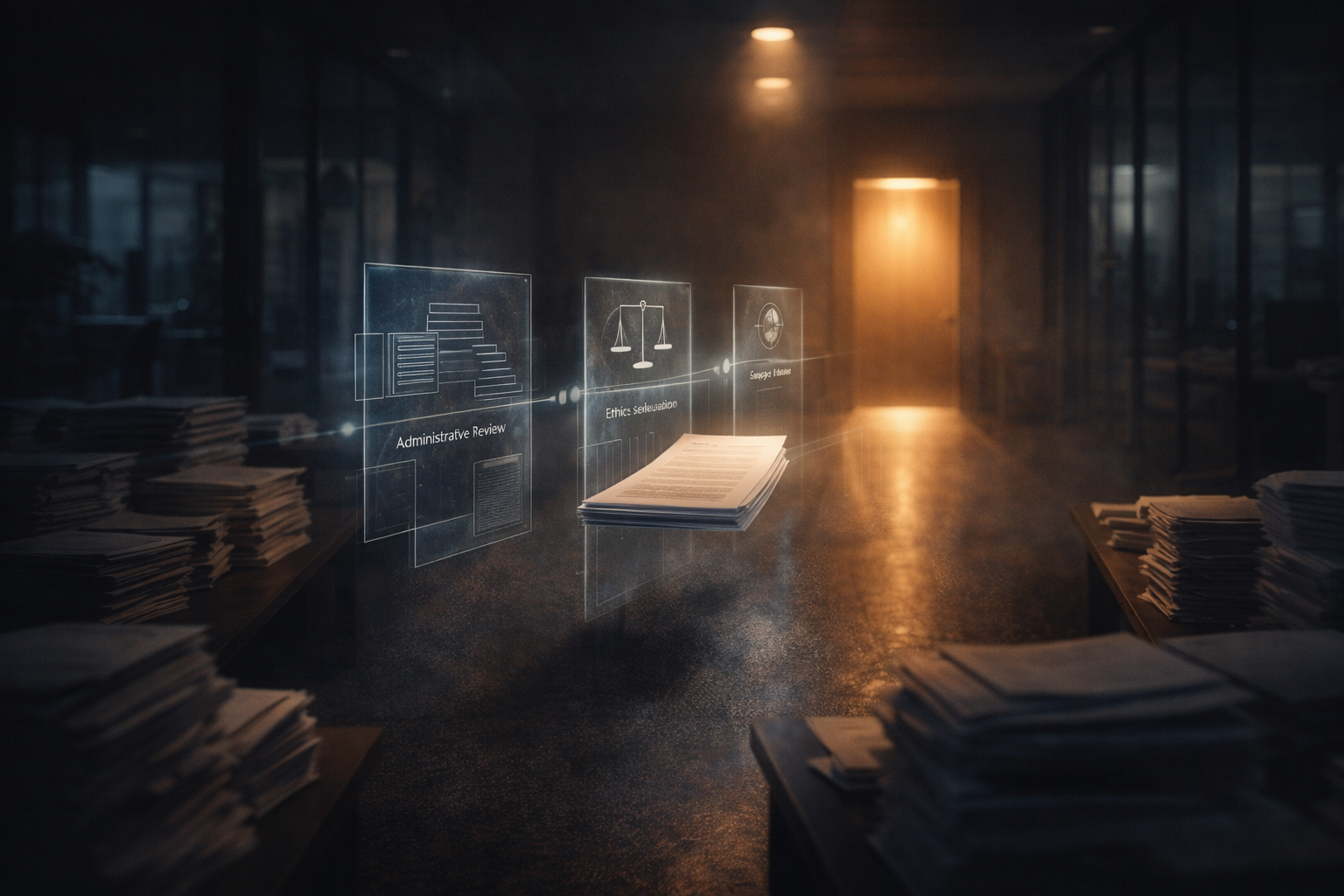
For many researchers, the peer review stage feels like the real beginning of the publication journey. But long before reviewers see your manuscript, your paper goes through a series of editorial checks that quietly determine its fate. This hidden phase—what happens before peer review is where many papers are filtered out, often without detailed feedback. Understanding this stage can help authors avoid preventable rejection and design submissions that survive initial editorial scrutiny. This article explains what happens to your paper before review, who evaluates it, what checks are performed, and how authors can navigate this early but decisive phase of the publication process.
The Hidden Stage of Academic Publishing
Once a paper is submitted, it does not immediately reach peer reviewers. Instead, it enters an editorial processing pipeline designed to assess basic suitability, quality, and integrity.
During this stage, journals aim to answer a simple question:
Is this paper ready and appropriate to be reviewed by experts?
If the answer is no, the paper is rejected.
Step 1: Technical and Administrative Checks
The first thing that happens before peer review is a technical screening, often handled by editorial staff rather than academic editors.
They check:
- File completeness and format
- Word count limits
- Reference style
- Required declarations (ethics, conflicts of interest, funding)
- Figures and tables quality
Papers that fail these checks may be returned to authors or rejected outright, especially at high-volume journals.
Step 2: Plagiarism and Similarity Screening
Most journals run submissions through plagiarism or similarity-detection tools before peer review.
Editors look for:
- Excessive overlap with published work
- Self-plagiarism
- Improper citation practices
- Reused figures or text without attribution
High similarity scores do not automatically mean rejection, but unexplained overlap often triggers editorial concern early in the process.
Step 3: Scope and Journal Fit Assessment
Once technical checks are passed, the manuscript is assessed for journal fit.
Editors evaluate:
- Topic relevance to the journal’s aims
- Disciplinary alignment
- Intended audience
- Methodological expectations
A paper can be well-written and methodologically sound yet still be rejected before peer review if it does not align with the journal’s scope.
Step 4: Initial Editorial Read
At this stage, an academic editor performs a rapid but focused reading.
They typically review:
- Title
- Abstract
- Introduction
- Overall structure
The goal is not deep evaluation, but early signal detection: clarity, coherence, and relevance.
Step 5: Contribution Check
One of the most critical questions editors ask before peer review is:
What does this paper add?
Editors assess whether:
- The contribution is identifiable
- The work advances knowledge in some way
- The paper justifies the use of reviewer time
If the contribution is vague, overstated, or missing, the paper may not proceed further.
Step 6: Methodological Plausibility Review
Before peer review, editors also assess methodological plausibility, not rigor.
They check:
- Whether methods match the research question
- Whether data sources seem appropriate
- Whether claims appear reasonable
Obvious mismatches or unclear methods often lead to rejection before peer review.
Step 7: Ethical and Transparency Screening
Ethics checks are increasingly important before peer review.
Editors look for:
- Ethical approval statements (where required)
- Informed consent procedures
- Data availability or transparency statements
- Disclosure of AI tool usage
Missing ethical information can stop the paper before reviewers are involved.
Step 8: Language and Presentation Signals
Editors also assess writing quality before peer review.
They consider:
- Clarity of language
- Logical flow
- Professional academic tone
While minor language issues are tolerated, consistently unclear writing may signal deeper problems and lead to early rejection.
Step 9: Redundancy and Originality Signals
Before peer review, editors assess whether the paper:
- Repeats well-established findings
- Closely mirrors existing publications
- Appears to be a fragmented part of a larger study
Redundancy is one of the most common reasons papers are filtered out early.
Step 10: Editorial Priorities and Practical Constraints
Some decisions before peer review are influenced by:
- Reviewer availability
- Current journal priorities
- Thematic balance across issues
These factors are rarely visible to authors but can influence borderline decisions.
Why Papers Are Rejected Before Peer Review
Papers are most often rejected because they:
- Fall outside journal scope
- Lack a clear contribution
- Show methodological red flags
- Fail ethical or transparency checks
- Are poorly structured or unclear
These rejections are about publishability, not just correctness.
How to Improve Your Chances Before Peer Review
To survive the stage:
- Choose journals carefully
- State your contribution clearly and early
- Align methods with research questions
- Follow submission guidelines precisely
- Ensure ethical transparency
- Polish clarity and structure
Small improvements at this stage can dramatically increase the likelihood of reaching peer reviewers.
Final Thoughts
The fate of many papers is decided before peer review ever begins. Editorial screening is fast, structured, and selective—and it plays a crucial role in maintaining journal quality.
By understanding what happens, researchers can design submissions that pass this early filter and earn the opportunity for full scholarly evaluation. Peer review may shape final decisions, but editorial screening determines whether that evaluation happens at all.
Related Reading
From the Web
- Top 10 Common Reasons Reviewers Reject Research Papers
https://www.ref-n-write.com/blog/top-10-common-reasons-reviewers-reject-research-papers/ - Five Reasons Why a Similarity Report Is One of the Best Defenses Against Plagiarism
https://www.econtentpro.com/blog/five-reasons-why-a-similarity-report-is-one-of-the-best-defenses-against-plagiarism/463
